Economic value disconnects from volume
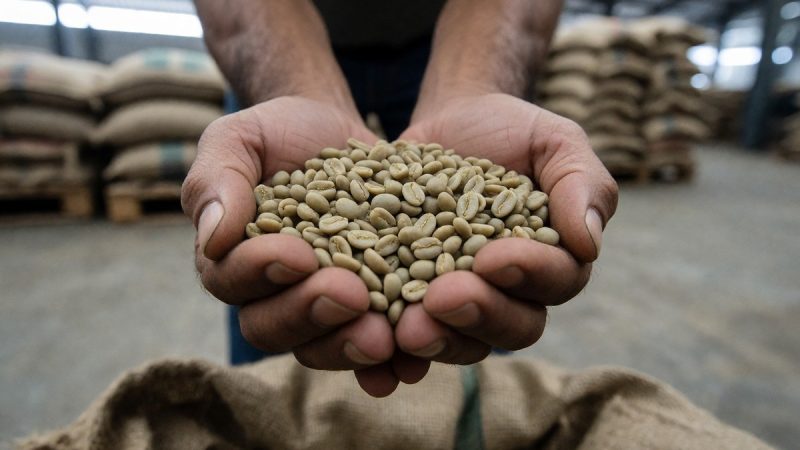
Vietnam’s coffee sector expects 1.8 million tonnes in export volume and more than US$8.6 billion in revenue during the 2025-26 crop year. Duong Le Huy, Director of the Department of Crop Production and Plant Protection within the Ministry of Agriculture and Environment, reports that the country exported over 1.56 million tonnes worth more than US$7 billion during the first 10 months of 2026. This massive output fails to generate proportional wealth for growers. Nguyen Nam Hai, Chairman of the Vietnam Coffee and Cocoa Association (VICOFA), notes that export volumes may increase by 21 per cent year-on-year, yet export value will only rise by around one per cent because average export prices fell by 16.5 per cent. Hai said, "This shows that growth in output does not necessarily translate into a corresponding growth in value." The industry faces a grim reality where massive volume increases do not prevent price erosion.
| Metric | 2025-26 Projection | 2026 (First 10 Months) |
|---|---|---|
| Export Volume | 1.8 million tonnes | 1.56 million tonnes |
| Export Value | > US$8.6 billion | > US$7 billion |
Processed coffee exports surpassed US$1 billion in 2025, but green coffee still accounts for 90 per cent of all Vietnamese exports. VICOFA leaders want more investment in processing, modern technology, and the promotion of Vietnamese Robusta.
Regulatory and climate pressures
More than 250 delegates from Brazil, Colombia, and Indonesia gathered in Ho Chi Minh City from 16 to 17 November to discuss the future of the global coffee sector. The Vietnam International Coffee Conference (VICO) 2026 focused on compliance with the European Union Deforestation Regulation (EUDR) and demands for supply chain transparency. Vietnam remains a low-risk country according to the European Union. To meet traceability requirements, the country uses its 2020 Forest Boundary Map.
Nguyen Nam Hai says coffee-producing countries face growing pressure from geopolitical uncertainty, fluctuating supply and demand, rising production costs, and climate change. Participants also discussed climate-related risks. These include the potential impact of El Nino conditions on coffee production in the Central Highlands in 2027. To support grower resilience, speakers recommended water storage infrastructure, early warning systems, and climate-adaptive farming practices. The conference included six discussion sessions on topics like deep processing, branding, green finance, and the use of artificial intelligence in coffee production.
Industry leaders examined opportunities in Fine Robusta, specialty coffee, ready-to-drink products, and emerging markets including China, the Middle East, and ASEAN countries. These discussions extend to the future of the industry through 2035, where workforce development and generational renewal remain priorities.
Topics