In this story
Rome investment forum begins
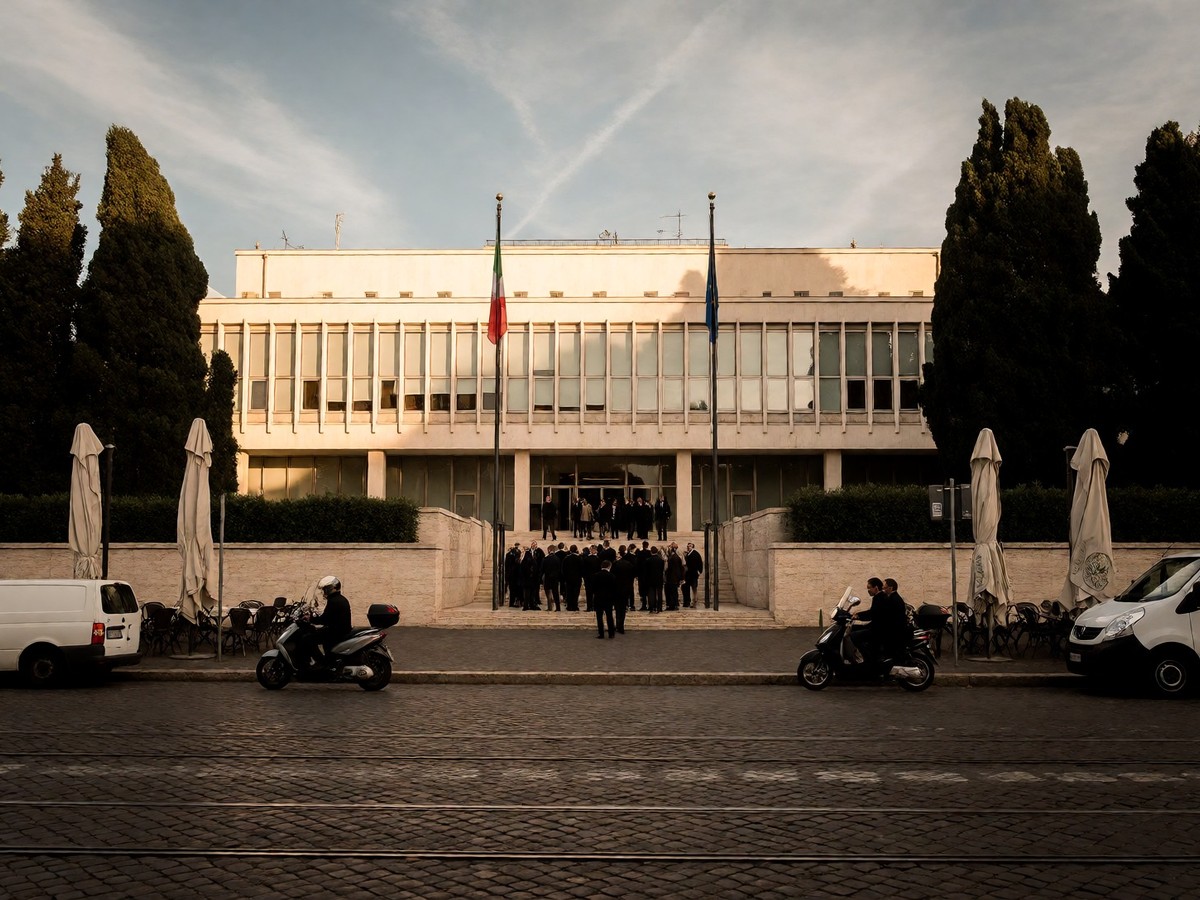
The Investable Beans: De-risking and Financing Forest-positive Supply Chains forum begins today, October 29, 2026, at the FAO headquarters in Rome. The coordination between the Food and Agriculture Organization of the United Nations, the World Bank, the United Nations Development Programme, and the UN-REDD Programme aims to address the investment gaps in deforestation-free coffee and cocoa value chains. This two-day event brings together the Lavazza Group, Ferrero, TechnoServe, the Papua New Guinea Cocoa Board, the Vietnam Coffee Cocoa Association, and the Coffee Quality Institute to examine practical business cases. The first day focuses on how financial and fiscal mechanisms can support farmers and producer organisations in adopting sustainable production practices. Sessions also examine the role of governments in creating the policy, institutional, and market conditions needed to support sustainable coffee and cocoa value chains. A panel on de-risking investments will explore how financial institutions can unlock capital through risk-mitigation strategies and innovative financing models. The forum aims to align investment and sustainability objectives across the coffee and cocoa sectors while helping stakeholders identify practical solutions to build more resilient and environmentally responsible supply chains. On the second day, participants will attend collaborative workshops to identify challenges, define priority actions, and co-create a framework to guide future investment efforts. Organizers also make the opening day available online via webcast with simultaneous interpretation in English, Spanish, and French.
Maritime disruptions and logistics
Logistical instability makes the focus of the Rome forum even more urgent, especially as the industry adjusts to a new normal of geopolitical shocks. At the SCTA forum in Milan on October 26, participants identified flexibility and alternative routes as the top priority for the industry. The Houthi blockade in the Bab el-Mandeb Strait and tensions in the Red Sea have effectively shut down the shortest maritime route between Asia and Europe, forcing ships to sail around Africa via the Cape of Good Hope. This diversion adds roughly 20 days to transit times from Asian producing countries to Europe, the world’s largest coffee-consuming market. Because over 90 per cent of global goods move by sea, the industry relies on the control of maritime choke points. A senior executive at a European shipping company told traders that if one route is affected it has a knock-on effect on their entire shipping fleet. I agree with Dany Barkha, the global head of logistics at Sucafina, that putting the coffee on water with delayed transit time is better than waiting for the unknown. Barkha stated that resilience will be a compulsory core skill in supply chain management. Jose Luis Perez, the head of commodities at Commodity Supplies AG, noted that companies are now forced to hold larger stocks to avoid running out of coffee, which requires tying up more working capital and incurring higher financial and insurance costs. Although some analysts estimate Suez Canal transits will return to 80% of pre-diversion levels by February next year, costs are unlikely to return to previous levels because a risk premium for the threat of war will likely continue to apply.
| Market Data (Oct 26) | Value |
|---|---|
| NY December Arabica Close | 300.95 cents |
| NY December Arabica Low | 294.90 cents |
| NY December Arabica Change | -2.1% |
| London January Robusta Close | $3,201 |
| London January Robusta Change | -1.3% |
| Brazilian Real Change | -9% |
Currency shifts and market volatility
Market instability complicates these sustainability efforts, as seen in the October 26 session where prices fell following the Brazilian presidential election. The Brazilian real plunged 9% after the re-election of President Luiz Inacio Lula da Silva, which encourages exporters to sell more coffee because they can get a higher dollar price for their sales. In New York, the contract for December delivery fell by 2.1 per cent, closing at 300.95 cents, after hitting a low of 294.90 cents. London’s January ICE robusta coffee fell by 1.3 per cent, settling at a new low of $3,201. These price fluctuations occur even as the industry must manage higher fuel and fertiliser costs and the risk premium for the threat of war. I see the combination of geopolitical maritime threats and sudden currency shifts as the reason why the Rome forum’s focus on de-risking and financial stability is the most important development for the sector right now.
Topics