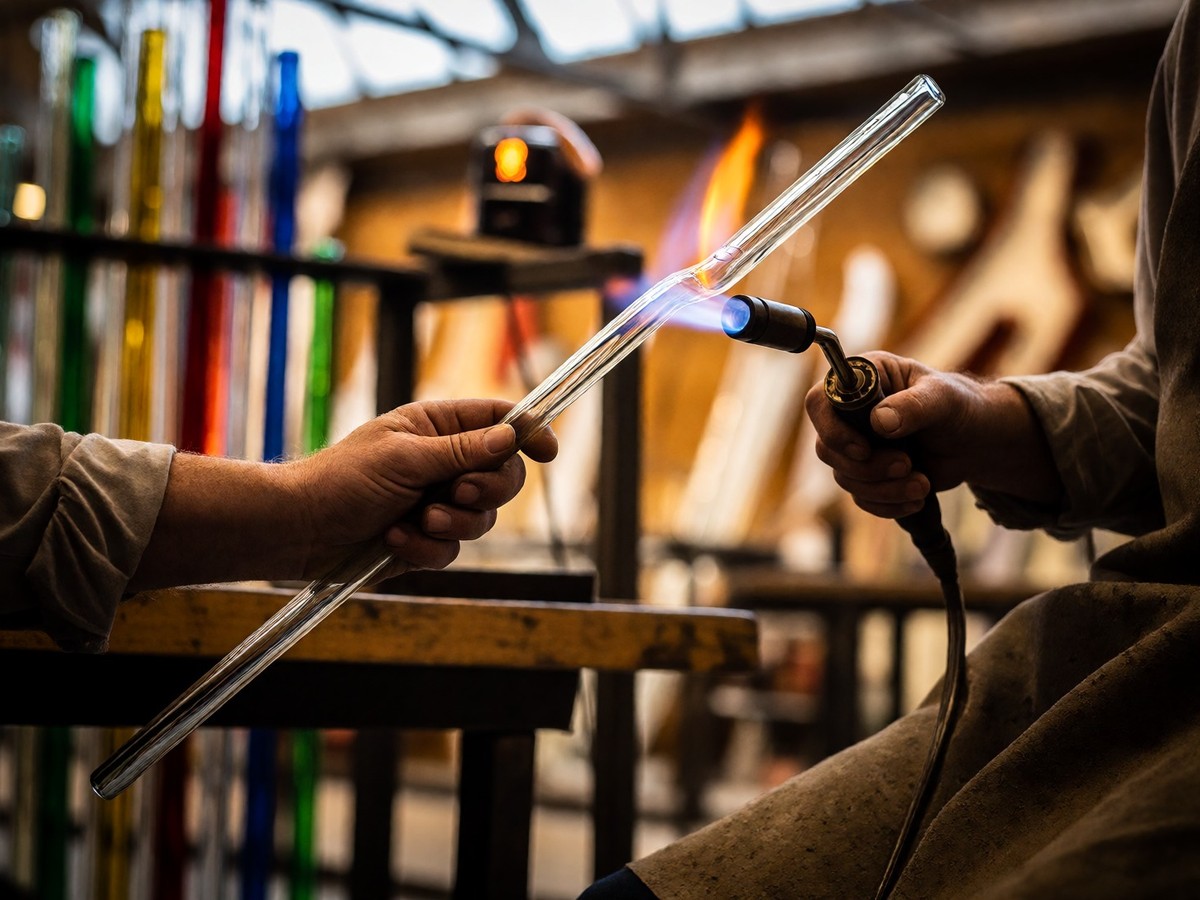
The skilled hands of Neon Works
Jim Rizzo founded Neon Works in 1989 to handle everything from new sign design to the restoration of historic glasswork. I visited the 17,000 sq ft San Francisco studio during a once-a-year public tour tied to the Neon Speaks symposium. The shop handles massive projects, such as the 2008 restoration of the 65-foot vertical Castro Theatre sign, for which Focus Features paid $70,000 to keep the icon of the Castro neighborhood shining. Two enormous Goodyear signs with weather-resistant baked enamel paint sit against the walls in the Oakland courtyard, and they once sat sixty feet above the ground to catch the eye of passersby. These signs use baked enamel because it is more weather-resistant than vinyl, which peels off. While Rizzo maintains high standards, the quality of modern components like housings, transformers, and tube supports has declined compared to older materials. He also observes that building an LED sign is so simple that a chimpanzee could do it. Rizzo says the skill in assembling a sign is high because you have to know how to not break the glass and how to wire it properly to ensure it works.
Keeping the tradition alive
Adam Taylor, a 29-year-old glass bender, uses flame and air to manipulate glass into unique shapes. Taylor mentions that his art school program was not kind to commercial neon, though he still uses the studio for his art. One of his most memorable recent works involved the bilingual Golden Star Radio sign in Chinatown, where the California Historical Radio Society raised $65,000 to fund the restoration. The studio also houses signs from businesses of the past, including a Kilpatrick’s Bakeries sign that Rizzo believes dates back to the 1940s. Taylor marks hashes on cold glass to know where to bend and how much material he will need for each letter, a process he used while making the letters "A-N-N" during a demonstration. He is one of the few younger professionals in the field, as most of his peers are 60 years or older. He stays in the trade for the sake of the future because he wants to see certain landmarks stay neon. Every neon sign is a unique labor of love. Taylor encourages people to support businesses that use real neon to help keep the craft going. Unlike LED signs that people throw in the dumpster, every part of a neon sign can be recycled.
Topics