In this story
Holiday Coffee Collections
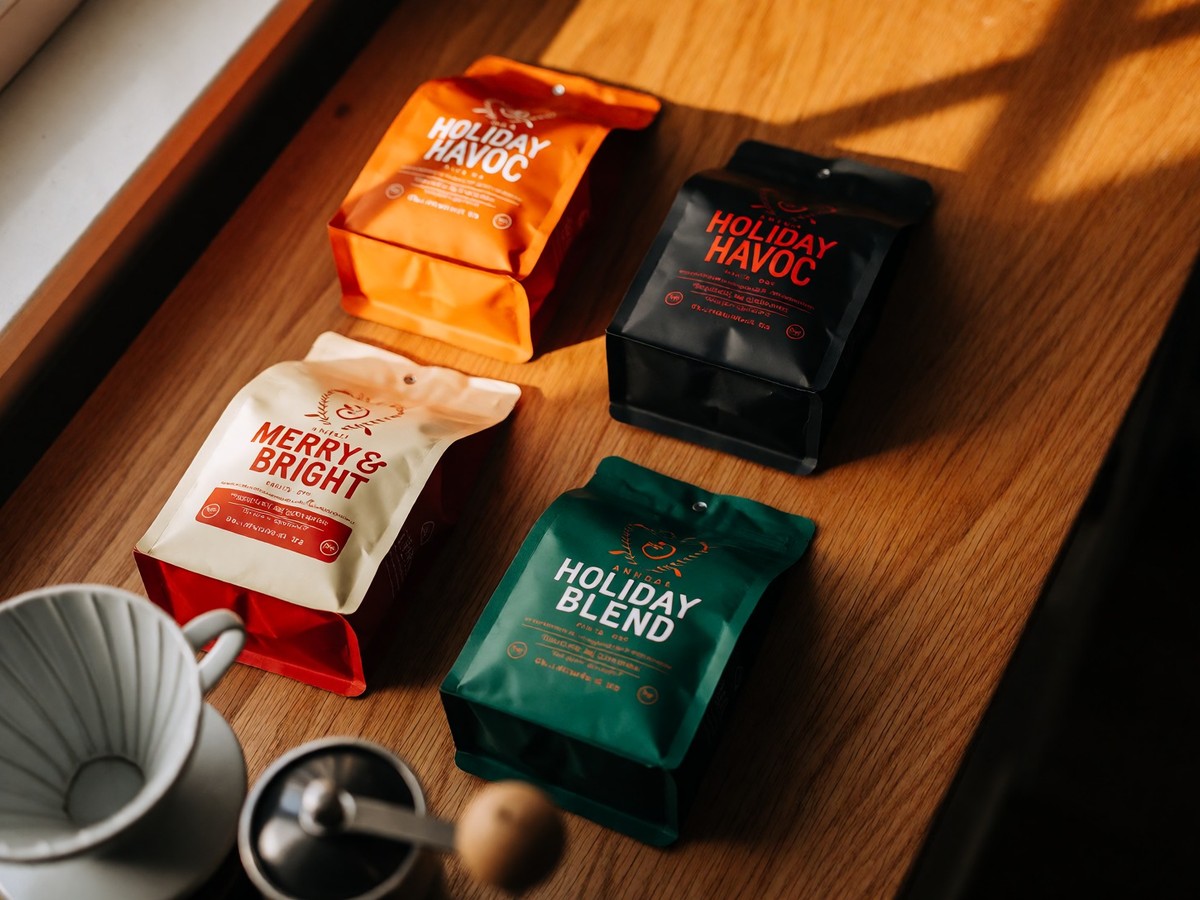
I am reviewing several holiday offerings from various roasting partners. The Nicaragua Orange Co-Fermentation from Finca Idealista arrives in a reusable orange bag alongside a white and blue stainless steel Klatch Coffee MiiR 16oz Sipper Straw Bottle, which uses a Dutch-inspired design to celebrate the founding family’s Dutch roots. Unblended collaborated with Sebastian Ramirez to create Holiday Havoc, which blends a Holiday Recruitment Lot with his Cinnamon Co-Ferment to produce flavors of cinnamon, gingerbread, and sugar cookie. This program pairs emerging producers with Ramirez as their mentor. I find the Regenerative Organic Certified Holiday Roast from Colombia uninspired due to its predictable caramel and plum tasting notes, although the $1 donation per bag or bulk pound goes to Growing Gardens. A different holiday option, Merry & Bright, uses four natural process coffees from Guatemala, Costa Rica, Ethiopia, and Brazil. This blend provides a lively cup profile with fruit notes for the colder months. The annual Holiday Blend combines natural and washed process coffees to create a full-bodied cup with notes of milk chocolate, orange marmalade, nutmeg, and mulled wine.
Single Origin and Regional Varieties
The current list includes several single origins from Ethiopia, Kenya, and Guatemala. A washed Kenyan coffee from Murang’a delivers a bouquet of papaya, pineapple soda, walnut, and maple syrup. This specific profile reminds me of the legendary Kenyan profiles from the mid 2010s. In Ethiopia’s Gedeo Zone, a light roast decaf natural uses the Swiss Water Process to produce raspberry, lilac, and peach pie notes. The Ethiopia Nano Challa provides syrupy peach and sparkling citrus with an orange blossom finish. In the Agaro region of Ethiopia, smallholder farmers produce Yukro, which will act as a cornerstone for the 2026 summer coffee program. Because Agaro’s harvest occurs early, Yukro is one of the first fresh washed Ethiopian coffees to arrive each year. I also see the Sookoo Coffee offering from Ture Waji, who operates in the Guji zone, using a natural process at the Adamo station that creates deep fruity and floral flavors. This Ethiopian offering is easy to drink while providing a strong strawberry character and apricot notes. For those seeking something different, the espresso blend from West Java and Guatemala mixes a fruity natural robusta from the Garut Regency with a chocolatey washed arabica from Huehuetenango to create a thick, creamy mouthfeel. This espresso presents Brazil nut and nutmeg alongside pear brandy. Olympia Coffee also provides a flagship blend from Colombia and Ethiopia with flavors of chocolate, caramel, and berries.
Processing Methods and Producer Projects
The latest selections include specific processing methods and producer collaborations. Ratibor Hartmann’s Project III returns with three Geisha selections, each selected and roasted by MAME, Proud Mary, or Phil & Sebastian, to explore the complexity of Hartmann’s Panama coffees. In El Salvador, the Elefante coffees from the Rodriguez family’s farms at Finca Nejapa allow for a direct comparison between two different processing methods for Bourbon and Typica trees. Hamburgo dries its washed Elefante on raised beds for 20 to 25 days to produce red grape, peach, and honey notes, while Joma uses a 24 hour cherry fermentation for its version. The Santa Elisa Pachup farm in Guatemala produces a washed Gesha microlot processed by Los Volcanes, which provides notes of tangerine, clementine, raw sugar, and white flowers. This coffee comes from the lower slopes of the Acatenango volcano. I also see the work of Red Fox in the Oaxaca region, where they have worked with producers in Sochiapam since 2022 to improve cup quality through better varieties, selective picking, careful fermentation, and improved drying. Cafe Feminista also presents coffees from women producers who identify with feminism and work toward equity and liberation.
Topics