China has grown into Slayer’s second-largest market, a position built on distinctive design and strong brand identity. Cimbali Group Legal & Corporate Affairs Director Flavia Volpi notes that the coffee economy is expanding at an extraordinary pace. The company recently secured a legal victory against manufacturers accused of producing counterfeit versions of Slayer equipment. This win protects the brand’s intellectual property in one of the industry’s most fiercely contested battlegrounds.
A decisive legal win
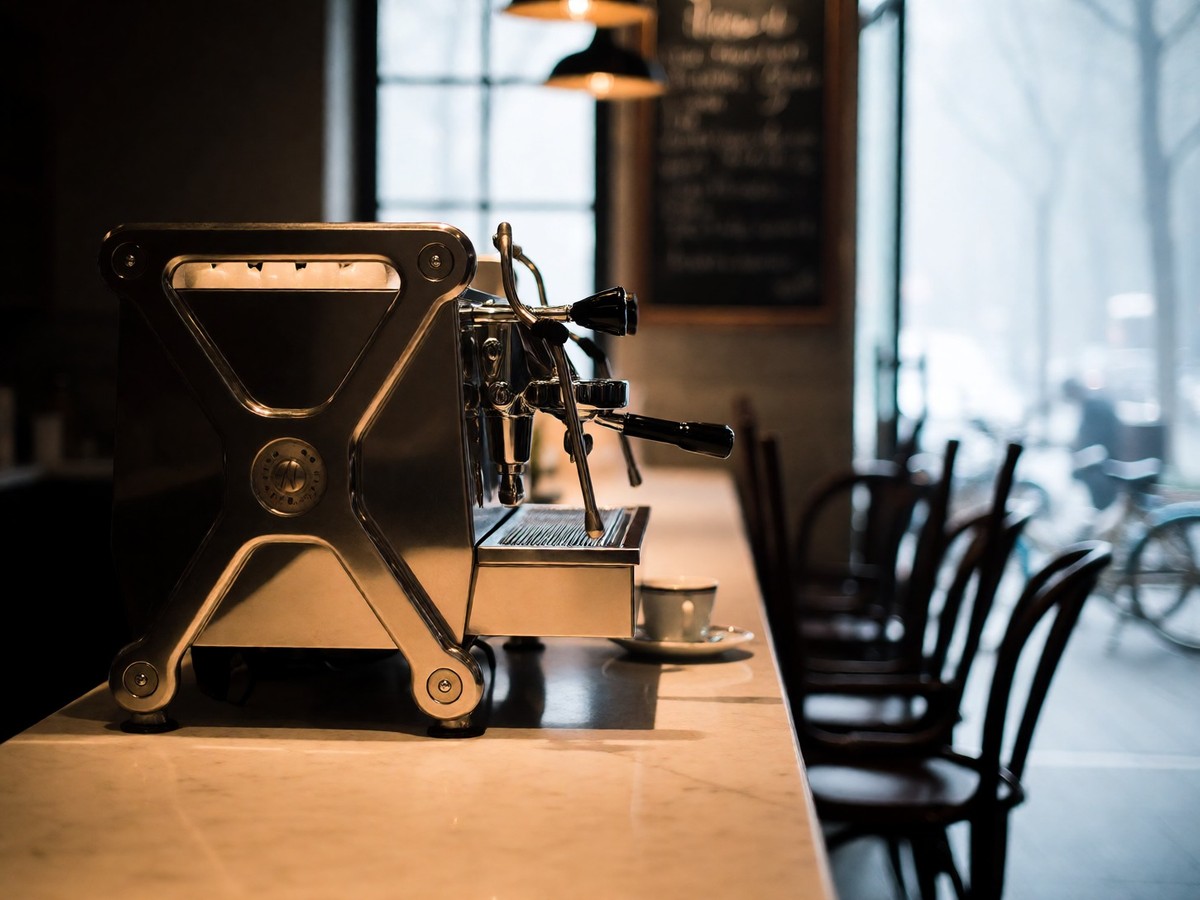
The appellate court ruled that signs used by defendants were phonetically similar to "Slayer" and likely to cause confusion among customers regarding a commercial connection between the products. The ruling additionally recognized the machine’s overall appearance as protectable trade dress, including those distinctive individual features defined by designer Christopher Flechtner. Volpi says the appellate court’s ruling was not only the first of its kind but was decisive on several fronts. First, the Court recognized for the first time the trademark infringement, reversing the first-instance decision. Second, the Court confirmed that the overall appearance of the Slayer espresso machine constitutes protected trade dress, a recognisable identifier of the product’s commercial origin. Third, the damages were more than doubled, from RMB 800,000 (US$120,000) to RMB 2 million (US$298,000), with joint and several liability of all defendants and an immediate cessation order. Taken together, the ruling shows that IP rights in China are enforceable assets, not abstract ones.
Volpi believes this experience challenges historical perceptions that foreign companies struggle to enforce rights in China. She points out that litigation involving foreign parties represents only around ten per cent of IP disputes before senior Chinese courts. The judgment examines every piece of evidence submitted to establish the recognisability of the Slayer design in its market of reference. This included evidence ranging from trade show participation and media coverage to commentary from Chinese coffee professionals on social media platforms. The court proved rigorous, thorough, and ultimately willing to grant full protection to a foreign rights holder. A protective judicial system removes a significant element of country risk from the equation.
Design and market maturity
Flechtner explains that the recognizable profile of Slayer machines started from a practical engineering angle rather than an attempt to create something visually striking. At the beginning, primary drivers were that it had to be something completely new and unseen, with functionality and maintenance at its core. The open negative spaces of the ‘X’ let a technician easily remove the side panels, gain direct access to the machine’s vital innards, and even remove heating elements with incredible ease. The process of assembling and maintaining the machine could not be compromised for aesthetics. Over time, these practical design decisions evolved into a distinct visual identity strongly associated with the Slayer brand.
The Espresso and Steam models are intentionally designed to appeal to different environments. The "X" of Espresso, with its hubs and actuators, makes a bold, masculine statement, whereas the Steam introduces a more flowing, somewhat more feminine aesthetic. Flechtner feels strongly that an espresso machine should fit naturally into its environment, and having two distinct aesthetics allows Slayer to reach a broader audience. According to Volpi and Cimbali, there are more than 87,000 dedicated coffee outlets in China, a 31 per cent increase in the most recent measured period. Domestic chains such as Luckin Coffee and Cotti Coffee take market share from long-time global players like Starbucks. Specialty coffee has gained serious traction, fuelled by expanding urban populations, growing cafe density, and a younger generation of consumers embracing innovation.
Volpi observes that imitation can often be interpreted as evidence of commercial success. Counterfeiters rarely target products that lack market visibility; they gravitate towards brands that carry prestige and strong customer recognition. The number of counterfeiters a brand attracts is, paradoxically, a measure of its success. Legal protection allows the value created by innovation to remain with those who created it. Innovation and design create brand value, and brand value attracts imitation. They are three sides of the same triangle. The case also teaches a lesson about timing: when your brand is being copied, time is never on your side. Register rights early and broadly, monitor the market actively, collect evidence rigorously, and act quickly. Legal action alone is not enough; lasting protection comes from combining enforcement with marketing and communication that make customers want the original.
Even comments collected on Chinese social media during the case showed operators actively asking whether products were originals. The market itself is learning to distinguish and appreciate the originals. For Volpi, that growing appreciation for authenticity is among the clearest signs that China’s coffee market is entering a more mature phase. Cimbali Group has already expanded trademark registrations across multiple jurisdictions and categories while increasing its vigilance towards unauthorised use of its brands. The group now acts immediately against anyone attempting to use its brands on machines, coffee shops, accessories, and adjacent categories. It has also grown its presence on Chinese social media, recognizing the importance of maintaining visibility in this rapidly evolving market. As coffee consumption continues to grow and specialty culture deepens across China, competitors will continue to battle on originality, design, technology, and IP.
Topics