Algorithmic design and biological forms
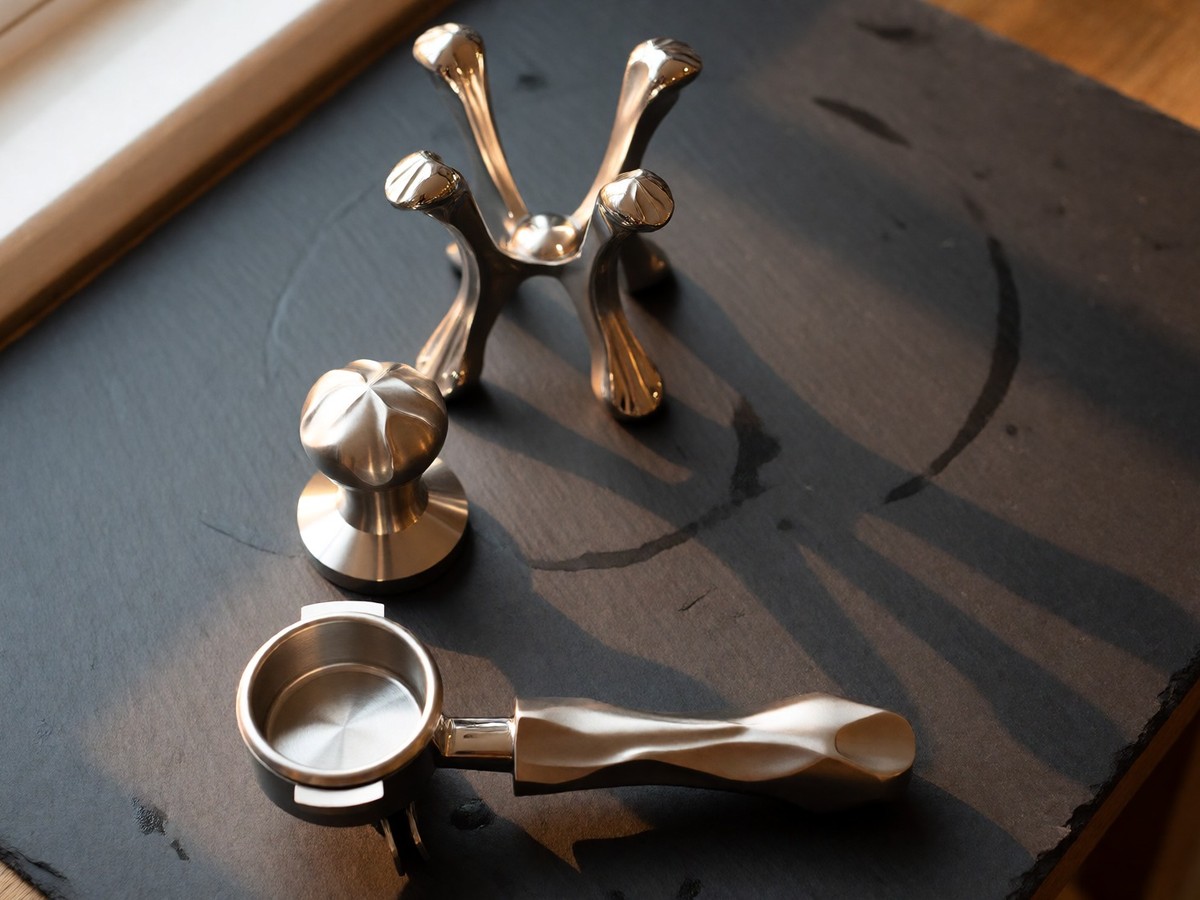
Pose Bureau produces stainless steel coffee tools through topology optimization to create shapes that mimic tendons and bones. Co-founder Prospero Wang and co-designer Yusheng Zhu, a professional illustrator and industrial designer, use algorithmic modeling to decide where the tools need more material or where they must avoid heat. The pourover stand mimics the leg of a dog and shows bones and muscles. The designers draw influence from the works of Dutch artist Joris Laarman and Chinese artist Zhipeng Tan. This manufacturing method makes the pieces harder to produce than the conventional metal parts the firm has produced for international clients since 2011.
The company uses a computer modeling process called topology optimization to identify an efficient distribution of a minimum amount of material to support the intended purpose of each coffee tool. The team combines 3D printing with investment casting through a process they call lost-PLA casting. They create 3D-printed plastic patterns, encase them in ceramic shells, burn out the plastic, and pour in molten metal. Because the basic structural demands on a portafilter, tamper, and pourover stand are relatively straightforward, the designers have considerable freedom to add visual complexity. Wang noted that some early sketches for the stand were too crazy, which led the team to abandon certain ideas.
Pricing and production
| Product | Price |
|---|---|
| X Pourover Stand | $499 |
| 58-millimeter X Tamper | $99 |
| 58-millimeter X Portafilter | $249 |
Pose Bureau sells the X Pourover Stand for $499, the 58-millimeter X Tamper for $99, and the 58-millimeter X Portafilter for $249. A third production run of X Portafilters is scheduled for November. The company is also developing an espresso demitasse, a V60 pourover dripper, and a lever arm compatible with Flair manual espresso makers. The firm produces the tools in polished and matte finishes.
I find the brand’s focus on functional art more interesting than pieces designed only for display. Wang says that when you look at a chair, it has functions, but if it is mainly decorative, its value cannot be spread out through the practice of its parts. The firm chose coffee tools because it is limited to relatively small castings and driven by an interest in specialty coffee. The team produces objects intended for frequent physical interaction rather than display alone. They want people to buy the things they are designing. If a user operates a portafilter for 50 shots in a store, the value of the tool spreads out over the years of touch.